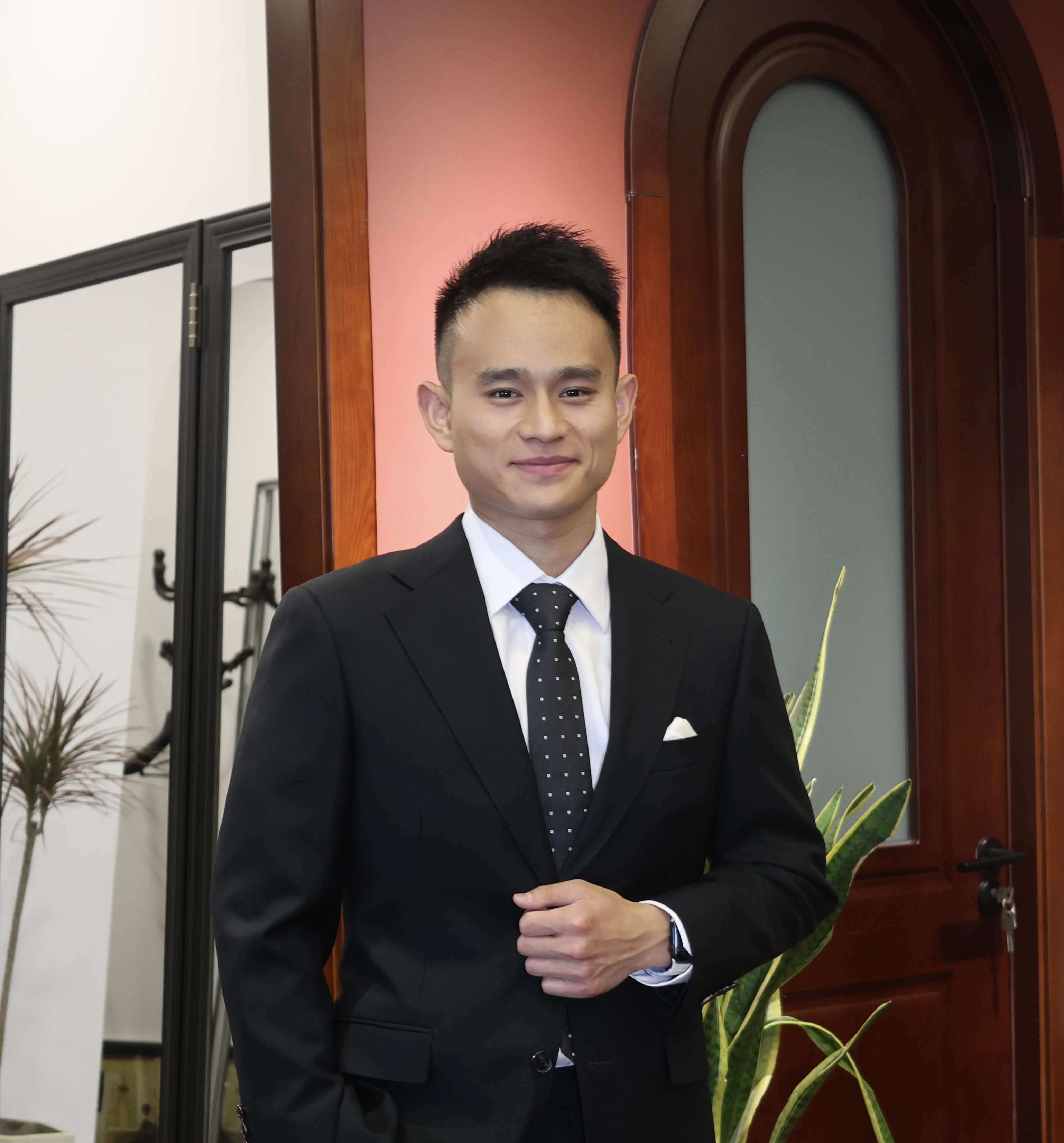
The MSU College of Social Science has awarded the 2026 Excellence in Graduate Student Teaching Award to Chao (Jerry) Fang, an award that recognizes graduate students who demonstrate exceptional dedication to instruction, innovation, and positive impact on student learning. Fang is a fourth-year Ph.D. student in the Department of Economics.
“I've always been passionate about teaching, so winning this award felt like real recognition,” Fang said. “It motivates me to keep improving in the classroom and reinforces that teaching will be a core part of my academic career going forward.”
“Jerry’s work has elevated the quality of instruction in our department and serves as a model for both graduate and faculty instructors,” said Professor Scott Imberman, chair of the MSU Department of Economics. “Jerry is an incredibly gifted and dedicated instructor and so it is wonderful to see that recognized by the College.”
Fang’s teaching performance has been consistently exceptional, beginning with running an online section of EC 340: Survey of International Economics. He then taught EC 301: Intermediate Microeconomics in fall 2024 and spring 2025, earning very high scores in his student reviews.
“Beyond the numbers, the student comments in his SPLS report speak volumes,” Professor Imberman said. “Students consistently describe Jerry as ‘The best instructor I’ve ever had at MSU,’ ‘Genuinely cares about student success,’ and ‘Goes above and beyond to make sure we understand the material.’”
Jerry’s teaching philosophy reflects a deep understanding of how students learn economics. He views the classroom as a dynamic environment where inquiry, interaction, and feedback drive learning. His approach bridges theory and real-world application—for example, using students’ own experiences with rent and housing markets to teach elasticity of demand. This method not only strengthens conceptual understanding but also motivates students to appreciate the relevance of economics in their everyday lives.

Another factor that sets Jerry apart is his relentless focus on accessibility and student engagement. He routinely offers extended office hours, creates detailed review videos, and provides structured problem sets that challenge students while supporting mastery.
He also gathers student questions and responses by using Kahoot game and IClicker polls and uses an open-ended feedback survey to gather questions. He provides answers to questions during the next class session before introducing any new concepts.
“The five minutes before each class is my favorite part,” Fang said. “That's when I pull up the feedback and questions students wrote after the last session, and we talk through them together. I think of teaching as a partnership between the students and me, so those moments where we adjust the course together are the ones that I enjoy most.”
He also uses the data he collects from IClicker and Kahoot to help him gauge their interest and learning rates.
“My most meaningful takeaways have been when I’ve run into former students who told me what they learned in my class helped them in courses they took later. That's the kind of thing that stays with you.”
With experience as a TA for seven courses and an instructor for three courses, Fang says that he has gained invaluable insights into effective pedagogy.
“These experiences have strengthened my commitment to becoming a faculty member who not only conducts impactful research but also transforms the classroom into an engaging, student-centered learning environment,” he said.
Fang’s economic focus is on international finance and trade.
“My research is about how global banks affect international trade under financial shocks,” he said. “My dissertation asks how global banks' cross-border lending shapes trade flows after these shocks, and whether firms plugged into global value chains experience that transmission differently than firms producing for domestic markets.”
Please join us in congratulating Jerry Fang on his well-deserved award.